
I just saw A Complete Unknown and I want to review it before my impressions grow stale.
I loved it—mostly. But two things bothered me.
Note: Since A Complete Unknown is about Bob Dylan’s first four years in New York City, I’ll acknowledge but not belabor the fact that the movie begins with a tired trope — folkies as the righteous underdogs versus a cartoonish “evil capitalist system” in a short scene of Pete Seeger’s trial for contempt of Congress.
Seeger and Guthrie weren’t just idealists; they were Stalinists. If you want to dig into that history, here are some links.1
Another issue: there are numerous websites bemoaning that the movie omitted or minimized various persons who were decisive to Dylan’s early career. These complaints may be accurate, but the makers opted for a lean story that focused on the interrelationships of Guthrie, Seeger and Dylan, and how Dylan moved beyond his original inspirations. You can’t please or include everyone.
Let me start with the good stuff. The acting was terrific. People who actually knew Dylan have praised Timothée Chalamet’s performance to the skies, so there’s nothing I can to that. Edward Norton is awesome as Seeger.
I want to single out Monica Barbaro as Joan Baez. Confession: I was ready to stuff cotton in my ears and cringe during her scenes. I never liked Baez’s voice, with its overwhelming, artificial, clangorous vibrato, or her Virgin Mary image, so I was pleasantly surprised by the earthy character on the screen. She did a great impression of Baez’s voice without imitating her. Barbaro’s soprano is far warmer and more alive than Baez’s, and had just the right amount of vibrato. Her singing was a highlight of the movie. Brava.
The movie did a good job of underscoring that the “folk revival” of the ’50s and ’60s was largely an urban phenomenon. It came out of places like Greenwich Village, Cambridge, or Berkeley — college kids and intellectuals “rediscovering” songs from rural America, dusting them off like artifacts. Clearly, Dylan saw this. I don’t know how many other people got that, but it fairly screamed out to me.
Overall: the arc of the kid from Hibbing to notoriety/superstardom is well-done.
Now, to my reservations.
The “Sylvie Russo” character, loosely based on Suze Rotolo, was troubling. The film turns Suze—Dylan’s actual, fascinating girlfriend—into a generic ‘love interest.’ In reality, she wasn’t just some Village dilettante. Coming from a highly unusual working-class Communist family (there were very few of them by the 1960s, especially among Italian-Americans), she immersed Dylan in leftist politics and, more importantly, introduced him to Rimbaud and the Symbolists—an influence that shaped his songwriting. She wasn’t a clinging flower; she left him, permanently, leaving him bereft, because she didn’t want to be a “string on his guitar,” a “chick,” a musician’s “old lady.” The film waters her down into a whiny cliché.
Also, at a ripe 26, Elle Fanning is too mature and statuesque for the physically elfin, teenaged Suze/Sylvie. I don’t think this is a nitpick. They chose actors who resembled Dylan, Baez, Seeger, and Cash, and made them up to look like their characters. Why not Suze?
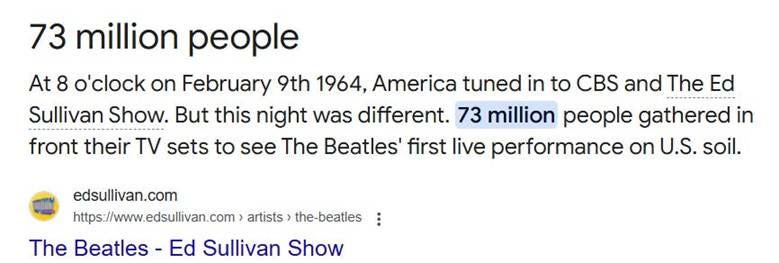
There is no mention of the Beatles coming to the US in February 1964. Leaving this out is a glaring omission. Dylan didn’t exist in a vacuum—he soaked up influences like a sponge, and the Beatles’ arrival in 1964 was a cultural tsunami. The movie didn’t need to show their famous meeting; a simple shot of Dylan watching Ed Sullivan on a grainy TV would have done the trick.
Streamlining is fine—rewriting history isn’t.
Even so, I enjoyed the movie and I’ll order it when it comes out in DVD.