
Sorry if any subscribers got an email for a previous version of this post.
I got the idea for this post from the excellent ‘Stack, Agamemnon’s Megaron, which has a brilliant series about the current attempt to erase Jewish history in Israel.
This particular idea came from a video embedded in Jewwashing, in which a “Palestinian” girl blithely refers to the Essenes as practicing an “unknown religion.” Yes, really. So I decided to have a little fun with Microsoft’s version of Chat GPT, Co-Pilot. The following is a transcript of a “chat” I had with it. Co-Pilot is absolute crap, but it comes free with my subscription, so I use it. I’ll try this with Chat GPT later on.
Who were the Essenes?
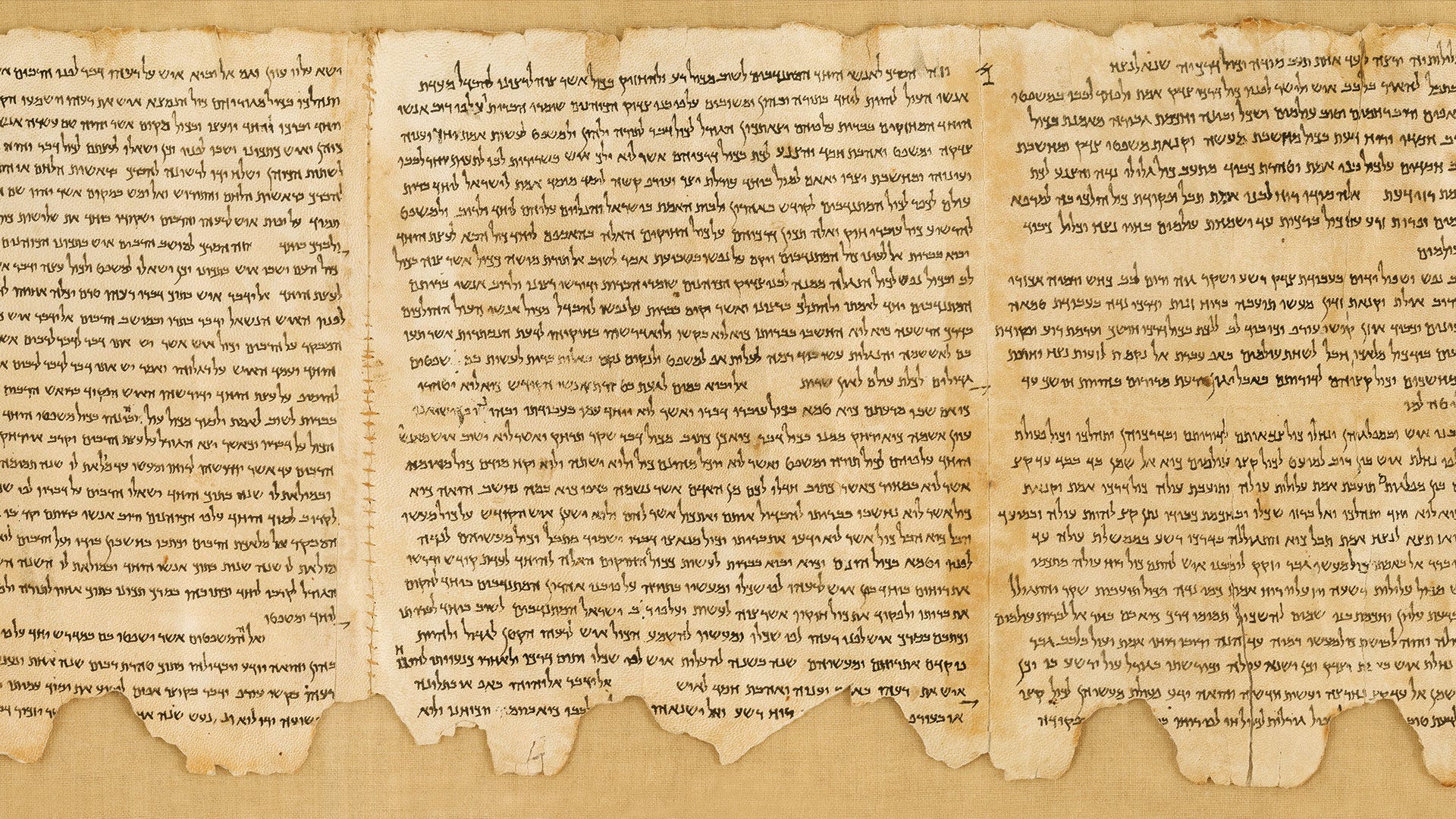
The Essenes were a Jewish sect that emerged during the Second Temple period, flourishing from the 2nd century BCE to the 1st century CE. They were known for their ascetic lifestyle, ritual purity, and communal living. The Essenes are often associated with the Dead Sea Scrolls, which were discovered in the Qumran area, believed to be one of their main settlements.
They practiced daily ritual baths, baptism, and mysticism, and held a dualistic worldview. The Essenes rejected the temple priesthood and emphasized a strict interpretation of Jewish law2. According to historical accounts, they numbered around 4,000 members and lived in various settlements throughout Judaea.
Does this help clarify who the Essenes were for you?
That's interesting! I saw a video in which a Palestinian girl said that the Essenes practiced "an unknown religion." Do you think she got it wrong?
It’s understandable that the term "unknown religion" might be used to describe the Essenes, given their unique and lesser-known practices compared to other Jewish sects at the time. However, the Essenes practiced a distinct form of Judaism, albeit with their own interpretations and rituals that set them apart from mainstream Jewish groups.
Their emphasis on communal living, ritual purity, and asceticism might have seemed unusual to those unfamiliar with their ways, possibly leading to the description of their practices as "unknown." But fundamentally, they were part of the diverse spectrum of Jewish religious life during the Second Temple period.
Is there a particular aspect of the Essenes’ practices or beliefs that you find intriguing?
Why is it understandable?
It's understandable because the Essenes' practices were quite distinct from those of other Jewish groups at the time. This could easily lead to misunderstandings or descriptions of their religion as "unknown," especially to people not well-versed in the variety of Jewish sects and their particular ways. They had unique rituals, communal living arrangements, and interpretations of Jewish law that set them apart, which might seem foreign or unfamiliar to outsiders.
In summary, while they were part of Judaism, their distinctiveness and the relative scarcity of information about them can make their practices seem enigmatic or unknown to some.
Are you curious about any other aspects of ancient Jewish sects or related historical periods?
Do you think that she was interpreting historical fact according to her politics?
It's possible that her interpretation of the Essenes was influenced by her own perspectives or context. People often interpret historical facts through the lens of their own experiences, beliefs, and cultural background.
Discussing ancient history, especially when it relates to regions with current geopolitical sensitivities, can sometimes reflect contemporary viewpoints. It's important to consider multiple sources and perspectives to get a well-rounded understanding of any historical topic.
Would you like to explore more about the Essenes or perhaps dive into another historical or cultural topic?
What language were the Dead Sea Scrolls written in?
The Dead Sea Scrolls were primarily written in Hebrew, but they also include texts in Aramaic and Greek. There are also a few fragments in Arabic and Latin. The majority of the scrolls are biblical texts, but there are also non-biblical literary works, documents, and sectarian manuscripts2.
Is there a specific scroll or text you're curious about?
So saying that the Essenes practiced an unknown religion is kind of a stretch, isn't it?
Yes, saying that the Essenes practiced an "unknown religion" is indeed a bit of a stretch. While their practices and beliefs were distinct and may have seemed unfamiliar to many, they were very much a part of the broader spectrum of Judaism during the Second Temple period. The term "unknown" might be more reflective of a lack of detailed understanding or awareness about their specific customs, rather than indicating a completely separate or unidentified religion.
They shared many core beliefs with other Jewish groups, such as monotheism and adherence to the Torah, even though they had unique interpretations and additional practices.
Would you like to know more about their specific rituals or any particular aspect of their community life?
No, I want to know why you're excusing an obvious fabrication.
I can see why you might feel that way. My aim wasn't to excuse any inaccuracies, but rather to understand and contextualize why someone might describe the Essenes' practices in that manner. Historical facts can sometimes be interpreted differently based on one's knowledge and perspective. It's important to critically evaluate such claims and refer to credible sources for accurate information.
If there's another topic or any other questions you'd like to explore, I'm here to help!
No thanks, I’ll use you for muffin recipes from now on.