Keep Your Friends Close
And Your Cannoli Closer

The line “Keep your friends close and your enemies closer” is from that ancient source of wisdom called …. Hollywood.
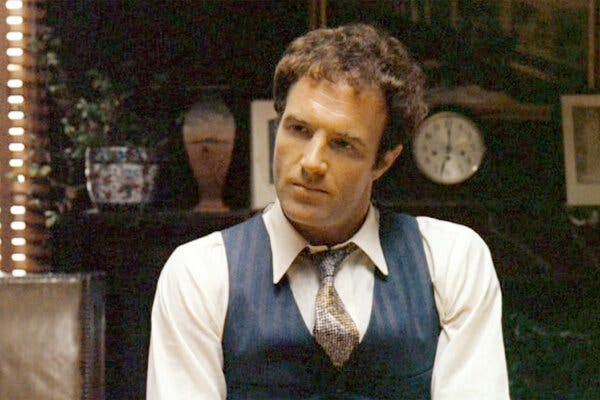
In The Godfather Part II (1974), Michael Corleone delivers the line to Frankie Pentangeli.
Pentangeli is furious at the Rosato brothers (rivals aligned with Hyman Roth) and wants to kill them outright. Michael stops him, telling him to keep calm, because Roth is more important than the Rosatos themselves. That’s when Michael says the line:
“My father taught me many things here. He taught me in this room. He taught me: keep your friends close, but your enemies closer.”
It works as movie dialogue because it dramatizes Michael’s paranoia and strategic patience. Also: it just sounds good. So Sicilian! So tough! So paranoid!
Hilariously, it’s not even in the book, and Mario Puzo wasn’t Sicilian – his parents came from Campagna.
So:
Not Sicilian.
Not Italian.
Not from Machiavelli, Sun Tzu, or Shakespeare.
100% Grade-A Hollywood.
But doesn’t it just make sense?
No. Taken literally, the phrase collapses under scrutiny.
Friends are, by definition, trusted and “close.”
Enemies are, by definition, distrusted and “kept at a distance.”
To hold both categories “close,” and one closer than the other, erases the distinction between friend and enemy. You’re effectively treating enemies with more intimacy than friends, which is nutty. Congratulations, you’ve just applied Hollywood mob logic to friendship—and failed!
It’s actually better to learn about your enemy’s plans, weaknesses, motives at a distance. No, you will not convince your enemy that you are his friend. You will only fool yourself.
No formidable enemy will obligingly reveal himself because you feign friendship.
The phrase is rhetorically punchy but logically incoherent. If applied literally it’s deranging and borderline suicidal. Its only defensible interpretation is metaphorical: observe your enemies more carefully than your friends. Maybe.
It doesn’t even work as “folk paranoia.”1
If you live by “never trust anyone,” you can’t form alliances, friendships, or even functional working groups. That’s isolating, not protective. Societies run on a baseline of trust; total suspicion makes you brittle, not resilient. No one is saying you give power-of-attorney to the next guy you have a conversation with.
Folk paranoia feels savvy because it promises safety in a cruel world, but in practice it erodes trust, magnifies misunderstandings, and leaves you isolated.
If there’s a wisdom of crowds, there is also a stupidity of crowds. That’s what’s going on here. A catchy movie line morphs into a philosophy of suspicion that, if universally applied, would destroy the very fabric of cooperation it pretends to safeguard.
But you know what?
Leave the gun, take the cannoli. That works for me.
Before Godfather, Puzo wrote well-regarded, serious literary fiction that sold bupkis. After The Fortunate Pilgrim earned critical praise but failed commercially, Puzo was deep in debt and looking for a breakthrough. His publisher suggested that if he added Mafia elements to an existing manuscript, it might sell better. Puzo started fresh with a new novel built around organized crime. He later admitted he didn’t know any real gangsters. The Mafia stuff in The Godfather was constructed entirely from research (and imagination). He called Godfather his “sellout” novel. Maybe I should try the same, but Jews just aren’t as colorful and sexy as Italians, even if we sometimes play them in the movies.
This space is free, apart from novel-in-progress excerpts.
If you’d like to contribute, you can do so here:
Buy Me A Coffee
Support is optional, non-transactional, and non-binding.
I remove comments at will.
Here’s my folk paranoia: “Keep your friends close; observe boundaries even with them; and your enemies at a distance.”