On Language and “Creativity”
My Blood Disapproves

Truthfully, I’m a little embarrassed by the confessional tone of this post. I’m more into the political and cultural commentary stuff, with a touch of wry. But here I go.
A ‘Stacker who I subscribe to (on the free plan, but still) wrote something that referenced George Orwell’s 1946 essay, “Politics and the English Language.” I have issues with that essay, but that’s another post for another day.
I specifically objected to this passage, which the writer excerpted for Substack Notes:
For example, take the term 'journey,' used as a metaphor for a life event or ongoing situation. Once, years ago, it must have been a new and vibrant metaphor, but now everything is a 'journey,' so really nothing is. In Orwell's terms, it is a dying metaphor, no longer imaginatively powerful and used only out of laziness…”
To be fair, this is a snippet from a paywalled post, so I might be missing his full point, but it landed like a jab, especially this: “used only out of laziness.”
I put in an objection to the note and then deleted it. I don’t want Substack to turn into X, with its endless and senseless arguments. Moreover, objections don’t always come across well on the internet. If that excerpt jabbed me, so might my disagreement jab him. I know what it’s like: you work hard on a post, and someone comes along and distorts what you said for obscure personal reasons—how annoying.
But I did have a problem with that excerpt, and I’d like to explain why here, in my space. First, I need to back up.
Creativity can lurk—sometimes for decades—while you silence it with shame (is that another verboten word?), smother it with perfectionism (ditto), or drown it in other people’s expectations. (Oops—another overused trope.)
Mine waited until I was past 50.
I spent years absorbing my mother’s regrets, her bitterness that she hadn’t become a writer, and her subtle pressure that I must. But only if I did it right—with literary gravitas, with Anthony Trollope looming over every sentence.
Add to that a world that worshipped a certain, shall we say, “attitude” and a voice in my head repeating quotes by Tolstoy (“sad little people who do not know what they want to do with their lives should not write novels”) and Fran Lebowitz (“Very few people possess true artistic ability. It is therefore both unseemly and unproductive to irritate the situation by making an effort. If you have a burning, restless urge to write or paint, simply eat something sweet and the feeling will pass. Your life story would not make a good book. Do not even try.”)1
What Lebowitz said isn’t a reasonable demand for standards, it’s an invitation for people to self-sabotage.
Then, almost literally out of the blue I got, not inspiration, but rupture.
From Amanda Hocking.
Who the hell is Amanda Hocking?
A working-class Minnesota kid with a high school degree who churned out paranormal romance fiction while holding down a day job at an assisted living facility, and then self-published her way into a seven-figure deal, that’s who. Her writing is… not in my wheelhouse2. But I was stunned by her example. She didn’t ask for permission. She didn’t wait for some workshop Karen to crown her with a tiara for being a good little girl writer. She acted. She wrote.
Something broke through—not the words, the act. A combination of admiration and competitiveness poured out of my hands. Yeah, competitiveness. If this girl could write freaking paranormal romance fiction, I could write the speculative novel that I’d been kicking around in my head since reading about an experiment in creating “bipaternal” mice in 2010.
I began writing.
Do I wish I could say, “I was inspired by Mary McCarthy-Flannery O’Connor-Eudora Welty-Willa Cather” or some great female writer of The Canon?
Maybe a little. But I wasn’t.
I was inspired by Amanda Hocking, author of My Blood Approves.
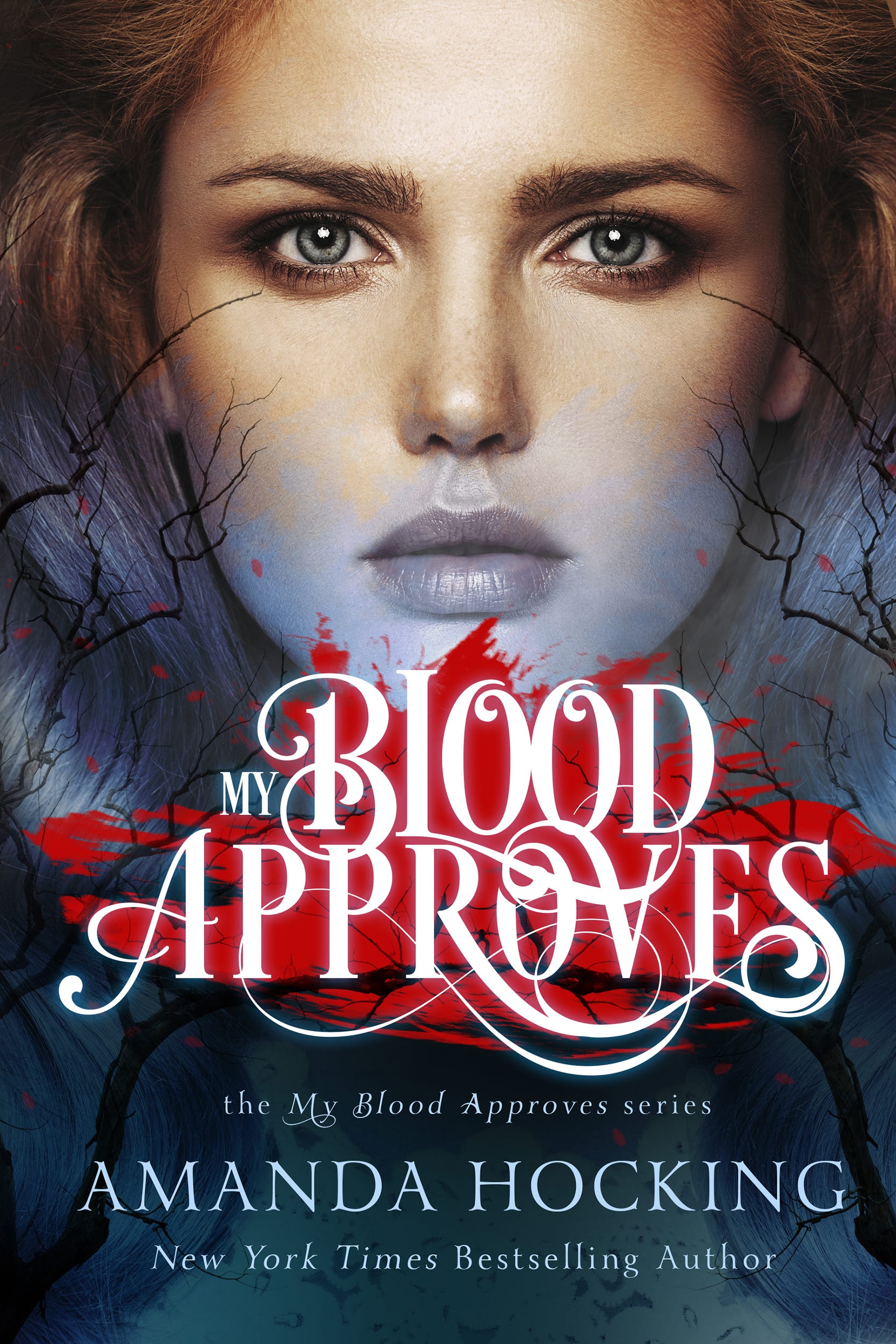
Sometime after I began, I came across this quote by Martha Graham:
There is a vitality, a life force, a quickening that is translated through you into action, and there is only one of you in all time, this expression is unique, and if you block it, it will never exist through any other medium; and be lost. The world will not have it.
It is not your business to determine how good it is, nor how it compares with other expression. It is your business to keep it yours clearly and directly, to keep the channel open.
My favorite part:
You do not even have to believe in yourself or your work. You have to keep open and aware directly to the urges that motivate you. Keep the channel open. No artist is pleased. There is no satisfaction whatever at any time. There is only a queer, divine dissatisfaction, a blessed unrest that keeps us marching…”
Nothing about good, bad, belief in yourself, all those things we’re told we must accept before we “create.” Just you and your channel, or else, oblivion.
George Balanchine, founder of the New York City Ballet, has been a sort of ghost mentor of mine since I first discovered who he was in 1972. He’s been quoted endlessly in the dance world, sometimes accurately. Several times he said variations of this:
I do not create. Only God creates. Man assembles.
So here we are: rupture—a complete demolition of Tolstoy and Lebowitz—and articulation of the predicament (Graham) and a humbling reminder (Balanchine).
At first my writing was messy and hesitant.3 I wrote in longhand, because my hands had things in them that couldn’t be tapped out on a computer. Creativity, excuse me, assembling doesn’t care about your past or your fear. In fact, it doesn’t care about YOU. It just needs you to shut up long enough for the channel to open.
Sometimes it takes fifty years to say, “Fuck it—I’m ready.”
Daniel Saunders called ‘journey’ a lazy, dying metaphor. But many words have suffered overuse—that’s no reason to abandon them. We don’t dismiss a dish for containing salt but for failing to balance it. Choosing “journey” for my tagline, “The journey you start isn’t the one you finish,” wasn’t a lazy choice, nor was it a worn-out metaphor. It’s an accurate, concise distillation drawn from eight hundred pages of overcoming doubts and gatekeepers. That word, “journey,” struck the right note for my work. If some consider it sentimental, so be it—it worked for me. 4
Don’t let anyone or anything hold you back. Not George Orwell, Count Leo Tolstoy, or Fran Lebowitz, and above all, yourself.
Here’s another Balanchine quote, for the journey:
Why are you stingy with yourselves? Why are you holding back? What are you saving for - for another time? There are no other times. There is only now. Right now.
That’s what it’s all about, isn’t it? Generosity.
Holding back is being a miser.
Keep the channel open.
Give it to the world.5
You can’t do that if you’re fretting about what Big Brother is going to think, can you?
And Fran: have a cookie.
Let’s revisit Orwell’s “Politics and the English Language.” He railed against politicians’ stale clichés, like “take up the cudgels,” claiming they cloud thought and hide truth—but do they? What if a demagogue deceives by using language with dazzling originality? Or a decent leader leans on a worn phrase but speaks from the heart? (Decency is a word Orwell used a lot so I use it here.) Martin Luther King plagiarized parts of his work—so what? His words moved mountains. Decency isn’t about avoiding clichés; it’s about stating goals that benefit humanity and how you propose to accomplish them. We can all agree that plain speech is better than flowery and that some words and phrases do tend to bring on a groan, but the real laziness is mistaking words for intentions.
Of the two, the utter gall of Fran Lebowitz was the one that outraged me—still does. I mean, Tolstoy is Tolstoy, but the idea that someone who wrote two thin volumes of non-fiction celebrity ephemera and who has coasted on that ever since has the chops to judge creativity is sickening. And the pretentious wording! What is she doing, auditioning for a spot at the Algonquin Round Table after four drinks? She can go to hell. Her miserliness and pomposity are nauseating.
Although she is capable of writing a memorable passage. “A couple things made that day stand out more than any other: it was my sixth birthday and my mother was wielding a knife. Not a tiny steak knife, but some kind of massive butcher knife glinting in the light like in a bad horror movie. She definitely wanted to kill me.” Some jerk on some website nitpicked at that passage. Fine — but the nitpicker didn’t come up with that image, which is indelible. I call that good writing.
Hemingway: “All first drafts are shit.”
A super-popular macho Substacker that I used to read once ridiculed the word “journey.” I later saw him use it, as in “my journey.” Permit me a roll of the eyes.
Later on, someone else might sell it for you—but now, you’re giving it to the world.
thank you that's a lovely way of describing creativity
Good piece. Nice, too, to see Leibowitz taken down a peg.